Shopify vs Wix: Which Platform Is Right For Your Business?
- Jasbani kaur
- Aug 8
- 3 min read

Every founder asks this question at least once. Usually right before launch, or right after a bad quarter when they're blaming the platform for what's actually a conversion problem.
Here's the honest answer: it depends on what stage you're at and what you're optimizing for. Let's break it down without the fluff.
The Core Difference
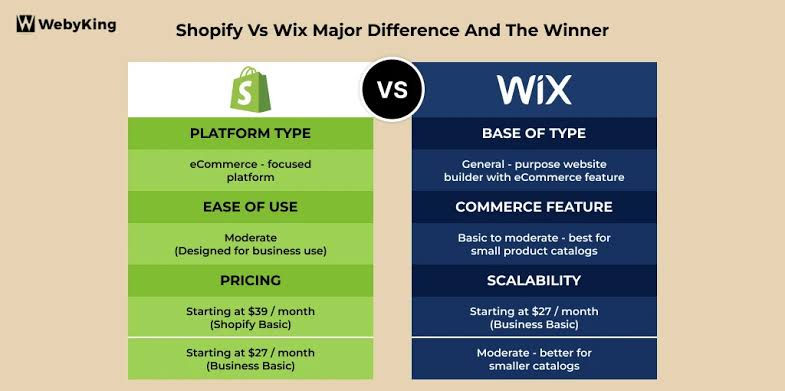
Wix is a website builder that happens to sell products.
Shopify is a commerce engine that happens to have a website builder.
That one distinction explains almost every other difference on this list.
Where Wix Wins

1. Speed to launch: Drag-and-drop editor, zero coding, live in a weekend. If you're testing a product idea before committing real budget, Wix gets you to market fast.
2. Lower entry cost: Cheaper starting plans. Fine if you're doing under ₹2-3L/month in revenue and just validating demand.
3. Design flexibility for content-heavy brands: If your business is more editorial/portfolio than pure commerce, think a founder-led brand with heavy storytelling — Wix's design freedom is genuinely better out of the box.
Where Shopify Wins (And Why It Matters More As You Scale)

1. App ecosystem built for D2C: GoKwik for checkout, Klaviyo for retention, Judge.me for reviews, Shiprocket for logistics; the entire Indian D2C stack is built to plug into Shopify first. Wix's app ecosystem is thinner and less India-specific.
2. Checkout is built for conversion, not just function. Shopify's checkout is optimized, fast, and increasingly supports one-click and UPI-first flows via apps. Every % you save in checkout drop-off shows up directly in ROAS. Wix checkout is functional but not built with the same conversion obsession.
3. Scales without a rebuild. Founders who start on Wix and cross ₹10-15L/month almost always end up migrating to Shopify: new theme, new apps, new checkout, months of lost momentum during peak growth. Starting on Shopify avoids that tax entirely.
4. Inventory, multi-channel, and ops: Selling on Instagram Shop, Meta catalog, or marketplaces alongside your own site? Shopify's backend handles multi-channel sync far better than Wix.
5. Reporting depth: CAC, AOV, LTV, cohort-level data. Shopify's native analytics plus app integrations give you the numbers you need to actually run growth. Wix's reporting is basic by comparison.
The Metrics That Should Actually Decide This
Stop deciding based on "which one looks nicer to set up." Decide based on:
Your current or projected monthly GMV: under ₹3L, Wix is fine. Above that, Shopify's ecosystem starts paying for itself.
Checkout conversion rate: if you're already live and RTO/drop-off is a problem, platform-level checkout tools matter more than theme aesthetics.
Growth trajectory: planning to run serious performance marketing, retention flows, or multi-channel selling in the next 6-12 months? Build for that now, not for today's order volume.
Total cost of ownership: Wix looks cheaper monthly, but factor in the apps you'll eventually need to bolt on to match what Shopify gives natively.
The Real Answer
If you're validating an idea with a small budget and no serious growth marketing planned yet, Wix is a reasonable starting point.
If you're building a D2C brand you intend to scale past ₹10L/month, run performance ads on, and eventually plug into GoKwik, Klaviyo, or Shiprocket, start on Shopify. The migration cost later is higher than the setup cost now.
Most founders don't need help picking a platform. They need help figuring out whether their platform is the actual bottleneck, or whether it's their funnel, creative, or retention strategy.
Building a D2C brand and want to go from idea to scale the right way?




Comments